
9 September 2026
Fresh
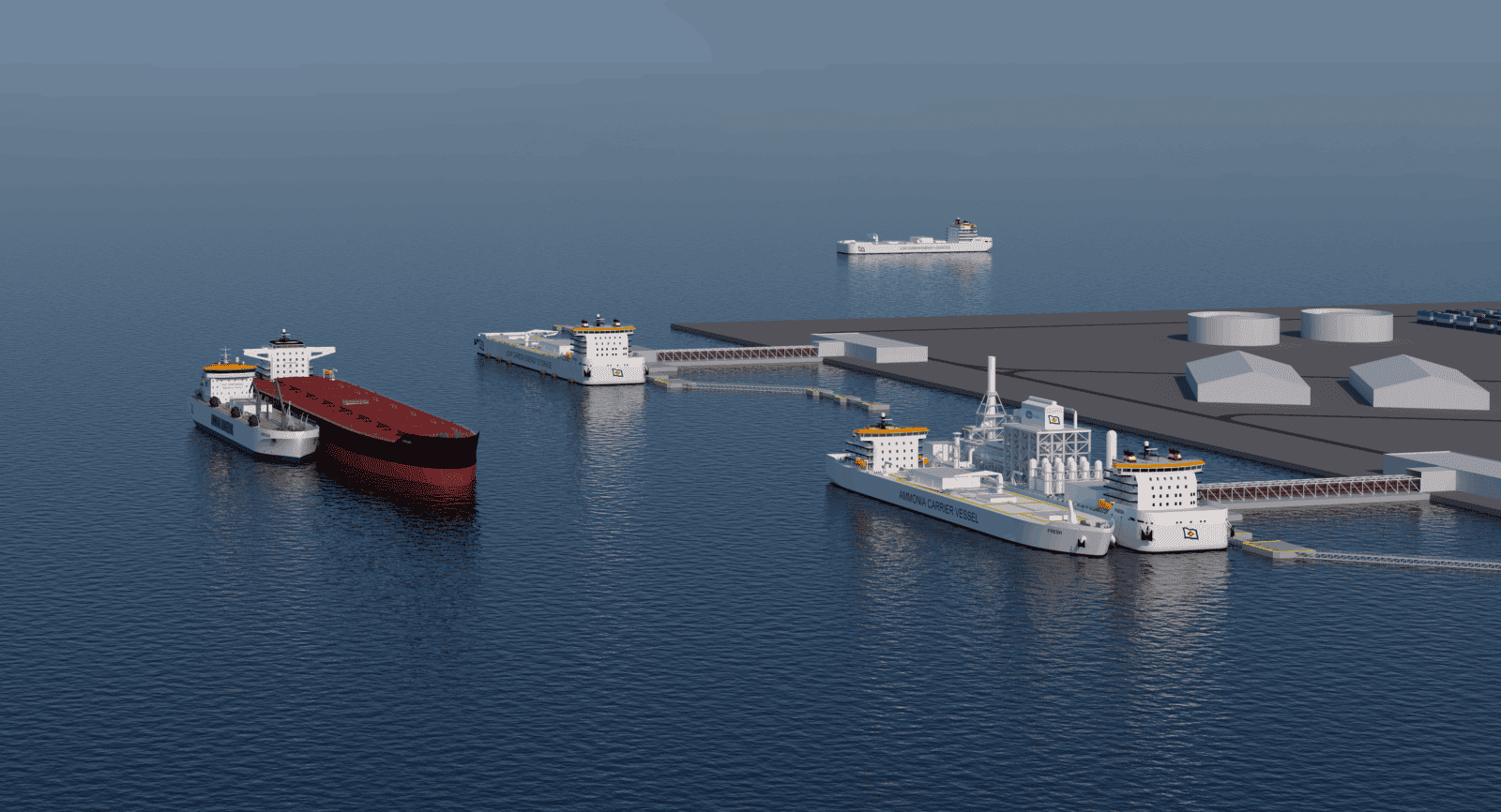
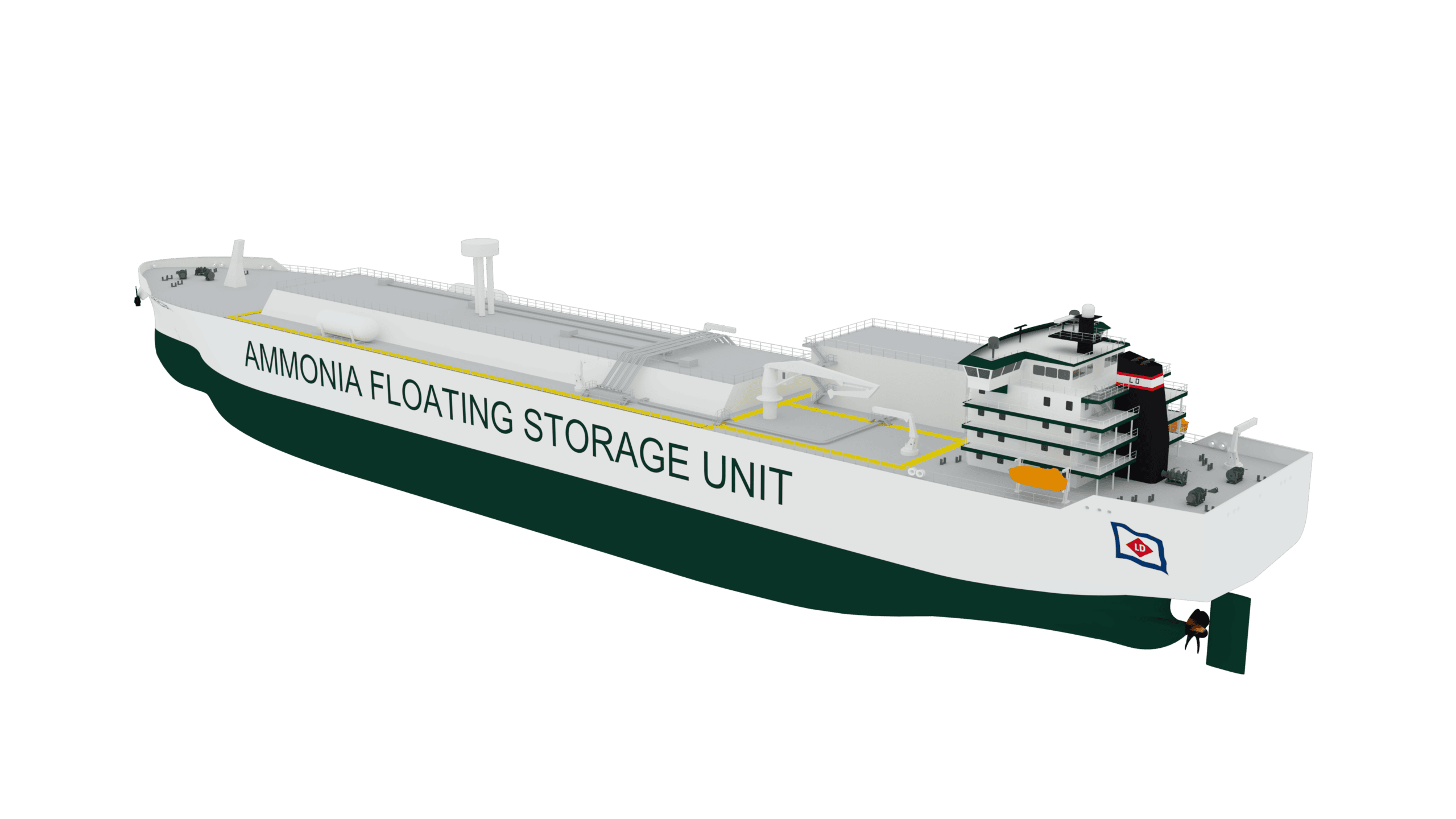
Floating Storage Unit (FSU) for Ammonia
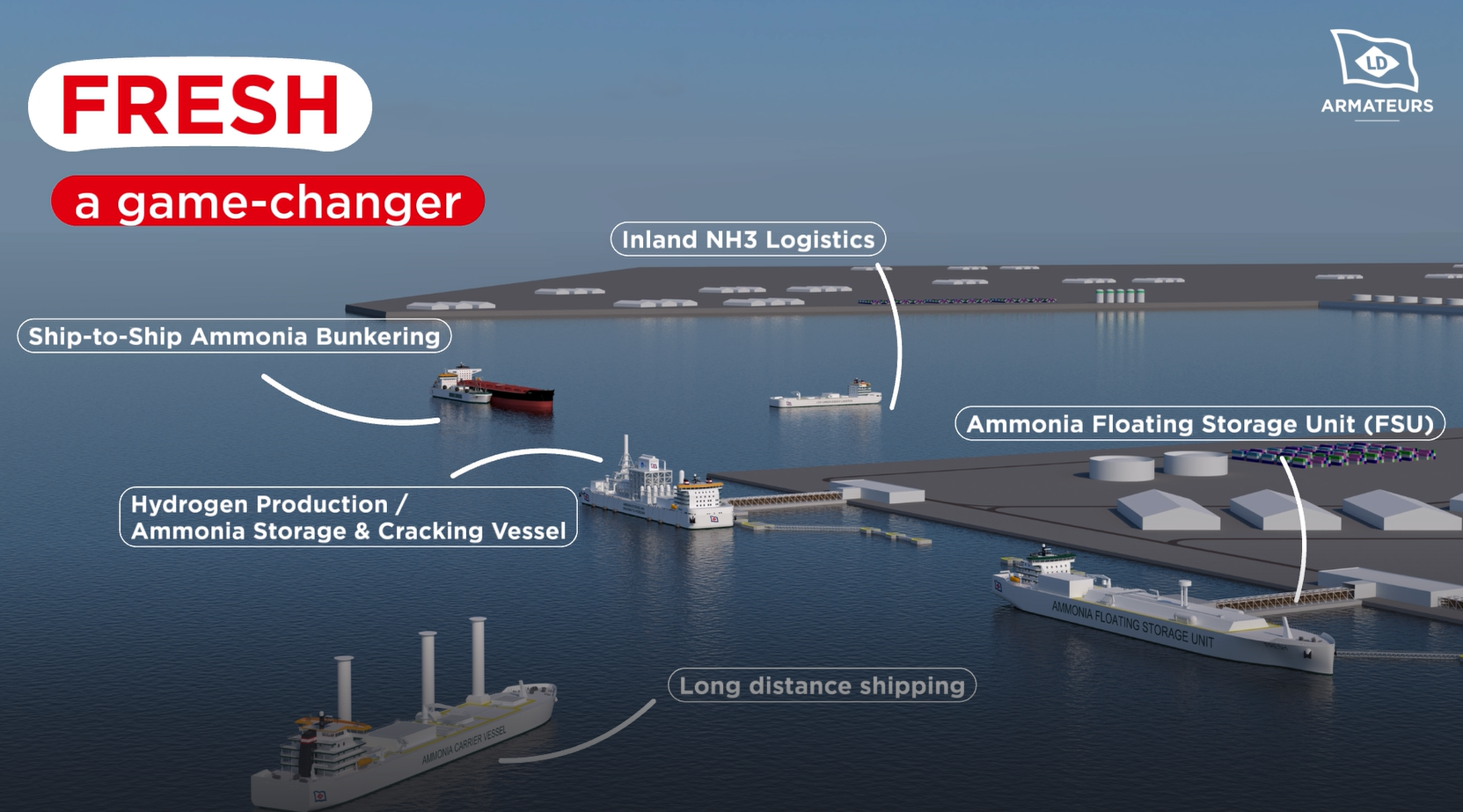
Floating storage offers an alternative to traditional onshore ammonia storage, replacing fixed tank farms with a fully refrigerated, atmospheric-pressure floating storage solution. This approach minimizes land use, reduces the complexity of permitting procedures and accelerates project deployment.
The reference studies conducted for FRESH have assessed storage capacities ranging from approximately 45,000 m³ to more than 90,000 m³ of ammonia, with a customizable design to meet each client’s requirements in terms of storage volume, handling capacity and operational profile.
Ammonia Bunkering Vessel
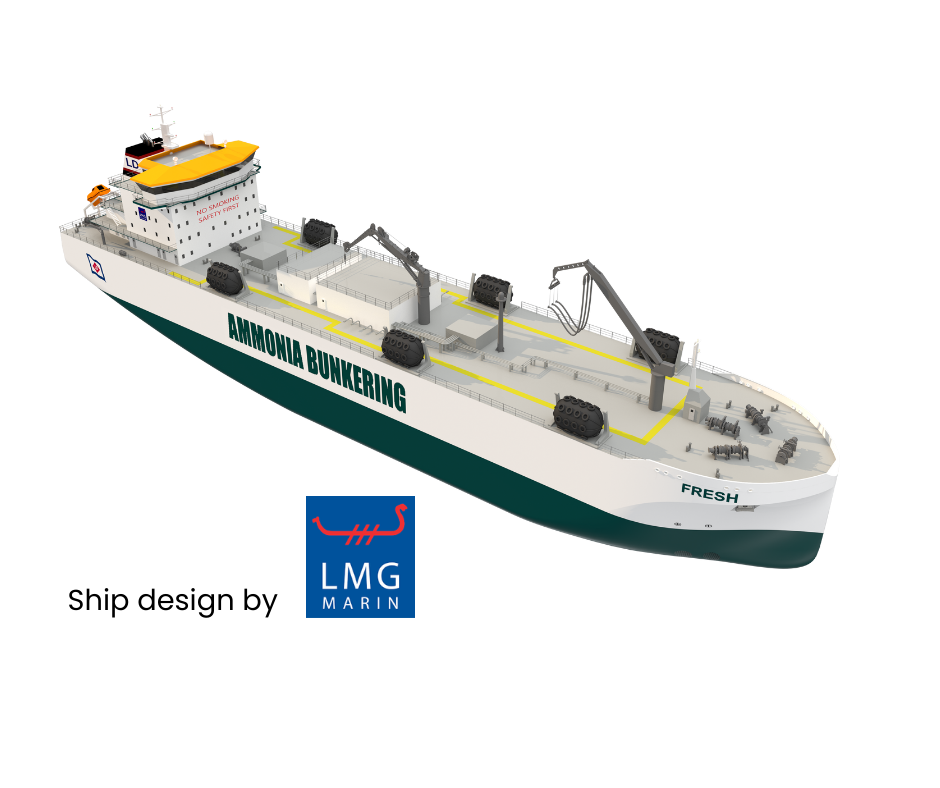
A dedicated bunkering function, sized independently from the storage function, enables the supply of ammonia to ammonia-fuelled ocean-going vessels, either alongside or at anchorage. Separating the bunkering capacity from the storage capacity ensures that a receiving vessel’s fuel supply is never constrained by the operating schedule of the storage terminal.
The FRESH ammonia bunkering vessel is designed around a 22,000 m³ ammonia storage capacity, providing a flexible, customizable and scalable solution for marine fuel supply operations, tailored to each client’s specific requirements.
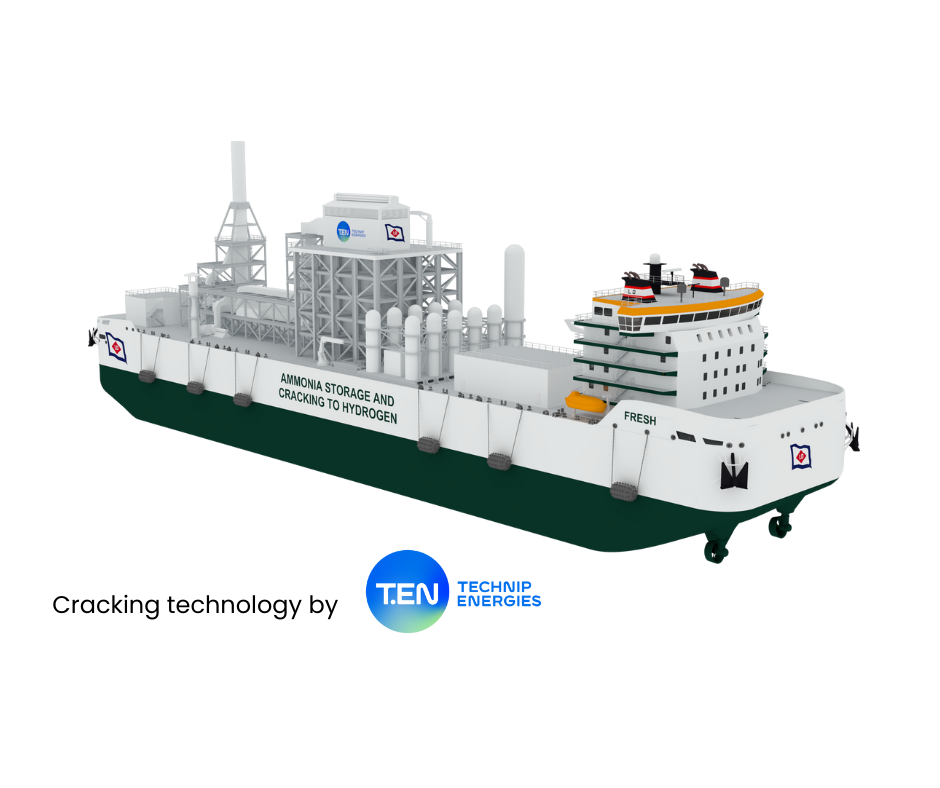
Ammonia Storage and Cracking Vessel
Where project requirements call for it, an integrated ammonia cracking function can be added to convert ammonia into high-purity hydrogen for end-use applications. For this solution, LD Armateurs has partnered with Technip Energies to integrate its ammonia cracking technology onboard a floating unit.
The FRESH floating ammonia storage and cracking vessel is designed around a 45,000 m³ ammonia storage capacity and can produce up to 50,000 tonnes of green hydrogen per year, with cracking efficiency of up to 81%. The concept is scalable and customizable to meet each project’s specific requirements in terms of storage and hydrogen supply.